“When They Love It, You’re Loving It”
- capuanograce
- Jul 9
- 4 min read

Looking to Food for Tradition, Sustainability, and Family.
By Grace Capuano
Walking into my Aunt Linda’s house on a breezy, sunny afternoon felt familiar. I had been there so many times before, for family gatherings, Sunday lunches, or just to stop by. This time, I came with a clear intention: to understand her story behind the meals we’ve shared around her counter, what keeps her connect
ed to food, and what she hopes our family will carry forward.
I started off simple, “what is your favorite ingredient?” I asked. “Chopped meat,” she says plainly, laughing a little at the simplicity of it. It’s not a sentimental answer, but a practical one.
“You can make a burger, a meatloaf, meat sauce, chili… it’s versatile.”
That same practicality runs through just about everything she says about food. It isn’t precious or performative. It’s useful, adaptable, and above all, meant to be shared.
She doesn’t cook for herself. “If I was home by myself, I would… have crackers and cheese,” she admits. Cooking, for her, only makes sense in relation to others. The reward is not the act itself, but the response. “When they love it… when you’re feeding them… everybody’s enjoying themselves.”
“When I'm in Fontana Liri, I feel like I'm home, almost. It's almost like the little fishbowl that I have here.”
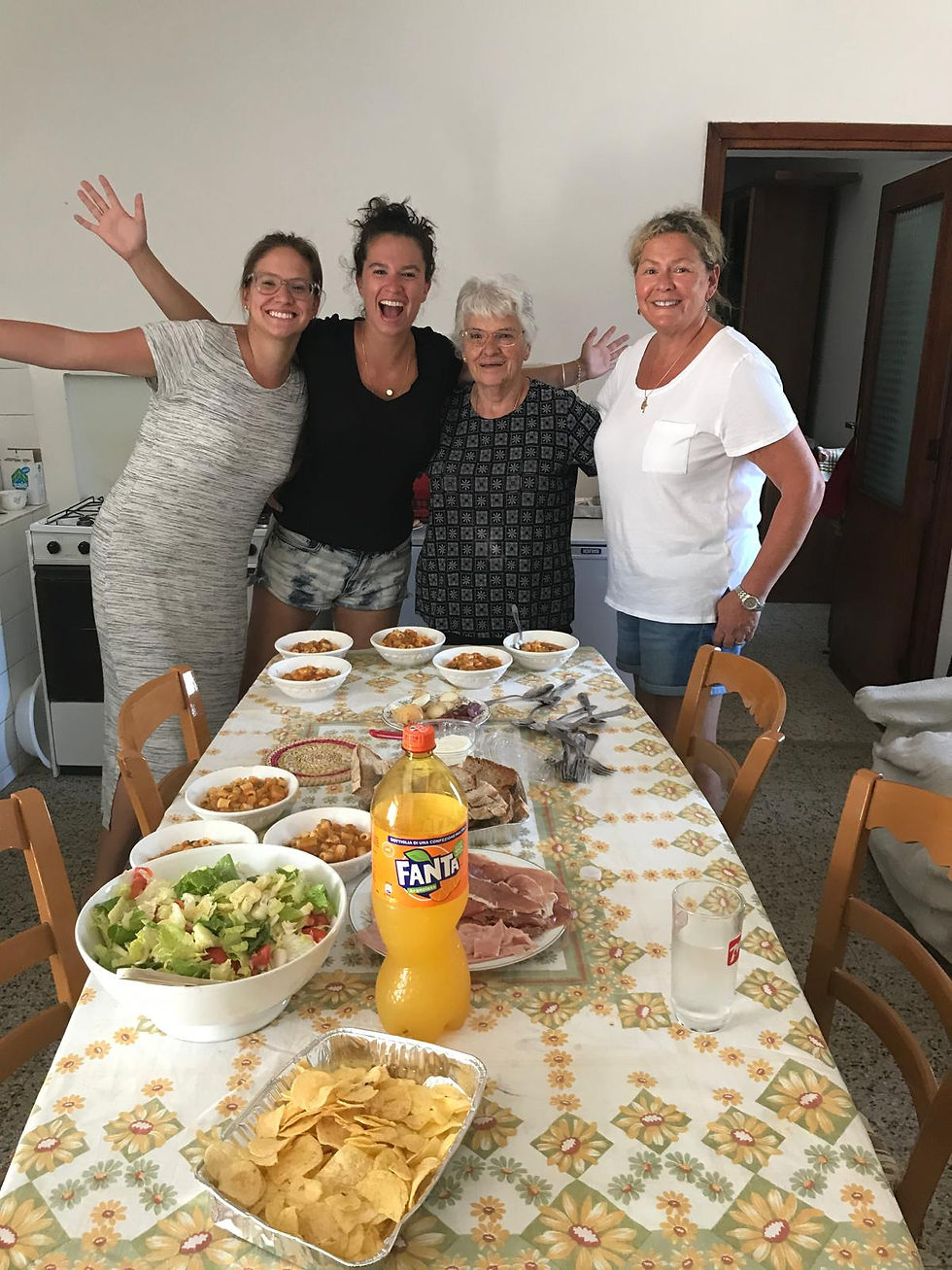
Despite growing up in Hastings-on-Hudson, New York, Linda’s first generation Italian heritage comes through clearly, especially when she speaks about her time in the rural mountains of Fontana Liri, where her mother and grandmother were raised. In Italy, the day moved around meals with a kind of certainty. Coffee in the morning, served at the coffee shop, then lunch, always on time. “Twelve o’clock, boom, everybody better be ready.”
Lunch itself followed a structure: pasta first, then meat, then fruit. But what stands out most is not the format, it is the sourcing. “They cook what’s in season… they grow their own… they go to the market.” This way of eating was framed rather simply, this is how things were done.
Back home, in New York, Sunday lunch remained central. Bread was always present, always homemade. Nonni, her mother, my grandmother, was always in the kitchen. “She was making bread all the time, you remember?” Linda recalls. I remembered.
Being the only girl in an Italian family also carried through. When discussing preparing meals growing up, she described herself as “the servant of the household,” a comment delivered with humor but rooted in expectation.
“I mean, everybody wanted that Sunday lunch.”
Today, the responsibility of being a homebase has shifted onto her. “I have taken over Nonni’s position,” she says. “The matriarch, keeping us together.” It is no secret, either, that this position was handed off. In the family group chat, she receives thanks and praises for a recent meal she cooked, one calling her the “heart that keeps us all together,” with a “100” emoji to seal it.
“There’s got to be something in the refrigerator I can pull out and throw together.” This ability to “throw something together” is not accidental. It is a skill shaped by years of cooking within limits, where waste is not an option and abundance is created through improvisation. “If I didn’t have food, no one would eat” she remarks of the comings and goings of her three children.
“I don't want the lights on If I don't need them, I don't, I don't want to be spending more money on waste.”
The idea of not wasting food, she explains, comes from both culture and necessity. “From a young age, we learned not to waste, and now…..food, electricity, gas, nothing.” Her parents’ generation “grew up with nothing,” and that absence shaped a different relationship to resources. “So where do you go from nothing? You go up.”
Waste is understood not only as a matter of saving money, but also as a matter of sustainability. Growing up in Linda’s kitchen, a paper towel would be used, dried off, and used again. Aluminum foil would be washed, and set aside. She stopped using single-use coffee pods years ago, disturbed by the accumulation of plastic. “If everyone [else] did that… that would be insane.”
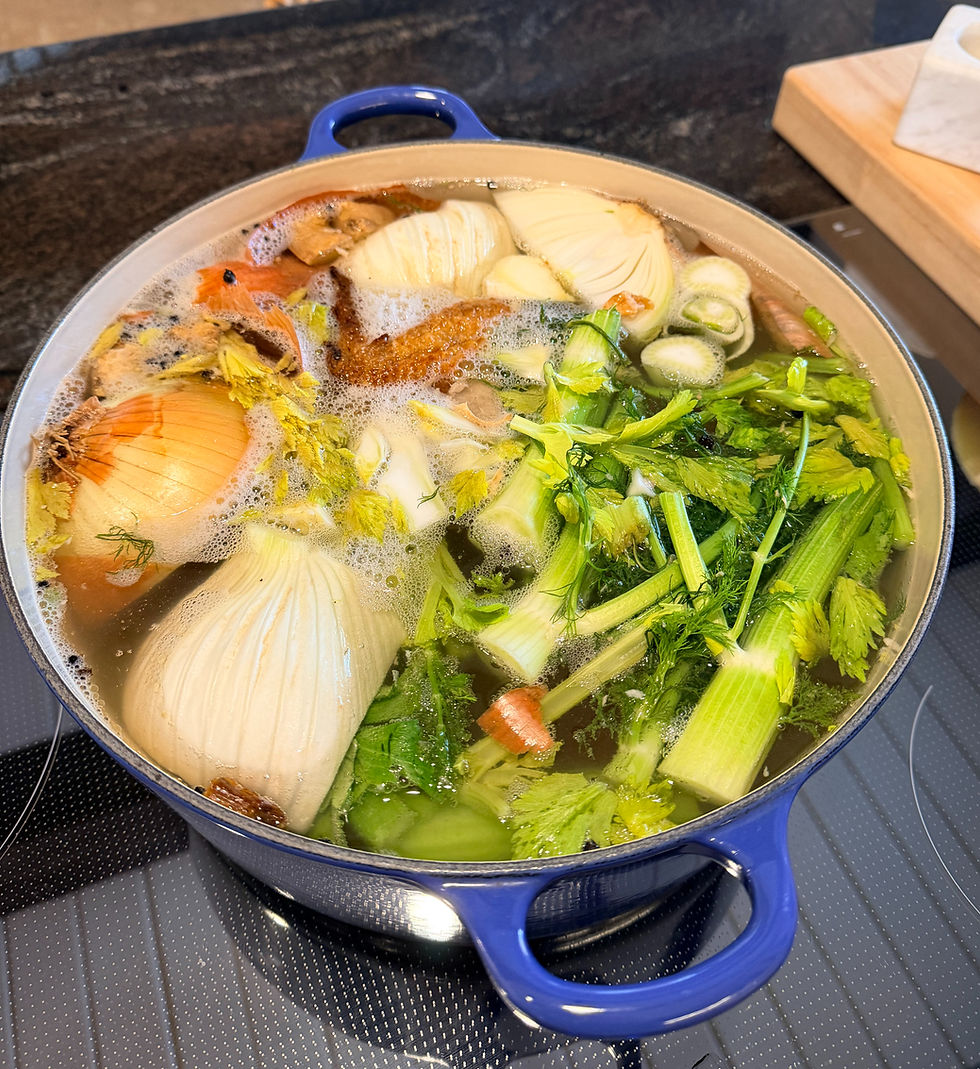
The same logic applies in the kitchen. A leftover ham bone becomes lentil soup. A chicken carcass once meant another two meals. Food extends, transforms, reappears. At the same time, she acknowledges limits. “Food should not be wasted, but it also should not make you sick.”
“I like food, and I like to enjoy food”
Still, Linda knows the conditions that shaped her relationship to food have changed. What once felt like a given, time to cook and sit down together, is no longer assumed. Life feels busier now, and the rhythm of home cooking has changed.
When I asked how her story connects to bigger ideas about food, family, and sustainability, her answer was simple. “It would be great for more people to… cook at home, have a little garden, sit down… and have a meal,” she says, before pausing. “I don’t know if that’s happening… everybody’s so busy now.”
“Food can bring a family together. Well, we, it always does, yeah, doesn't it always?”
When asked what she wants future generations to remember, her answer is immediate. “Food can bring a family together.” It is a phrase that risks sounding familiar, but within the context of her story, it carries specificity. Food is not love because it is symbolic. It is love because it shows up again and again, often without recognition. It is planning, stretching, saving, cooking, and serving. It is making sure there is enough.
Even now, certain traditions remain nonnegotiable. On New Year’s Eve, lentil soup must be made. “That is not even a question.”
“I hope to share my food with my family for many years to come.”
Linda’s story is not about nostalgia, but about continuity through change. Food is shaped by time, cost, labor, and family structure, but it remains at the center. It shapes how she shows care, how she thinks about waste, and how she brings people together.
And, perhaps most importantly, it is how she continues something that began long before her, in kitchens where nothing was wasted, where people came together, and where meals meant more than just eating.
Comments