Soil Survey: Millbrook, New York
- capuanograce
- Jul 9
- 8 min read

By Grace Capuano
Henry Hudson was met with the Lenape people in 1609 when he first encountered them in New York Harbor (Mount Gulian Historic Site, 2025). The Lenape, also known as the Munsee, lived in the lower Hudson Valley, The Mohicans lived in the upper Hudson Valley and the Wappinger people lived in between, where I live, on the east bank of the Hudson River between Manhattan and Poughkeepsie. (Blauweiss et. al. 2021). As the Ice Age glaciers receded, the first Americans moved on from their rock shelters and began to live in semi-permanent villages, developing a form of agriculture (Mount Gulian Historic Site, 2025). Their bounty was often sunflower seeds, tobacco, corn, types of sq
uash and many bean species. Large parts of their meals came from nature, which included ground nuts, berries, leafy plants, fish and wild game (Mount Gulian Historic Site, 2025). This area had lots of farmland and was able to grow these items due to the highly productive soils that are found in lime-rich glacial till, particularly in regions with good drainage and moderate slopes, such as a broad belt across the state and into the Hudson Valley (Campbell et.al, 2025). Alluvial soils, from glacial meltwater and river floodwaters, are common in valley bottoms, especially in the Appalachian Highlands, Mohawk, and Hudson rivers, and much of Long Island (Campbell et.al, 2025). Luckily for the Lenape, Mohicans, and the Wappinger people, the Hudson River was also full of fish such as striped bass, herring, and giant sturgeon (Riverpool At Beacon, 2025). Henry Hudson described these people as “healthy looking” which insinuates they were well fed (Mount Gulian Historic Site, 2025). It didn’t take long for the colonists to take over and ruin the ways of life of these Indians. At first, the Natives and colonists would trade items such as “tools, clothes, blankets, weapons, utensils, beads, liquor, and other goods that could be acquired by trading for abundant local resources like beaver skins, which were in high demand in Europe for fur hats” (Blauweiss et. al. 2021). The greater influx of people from Europe entering America also brought with them disease such as smallpox, measles, diphtheria and scarlet fever, killing thousands (Blauweiss et. al. 2021). During 1609 and 1664 when New Netherlands took over the Lenape and Wappinger areas, the Native Indians gradually lost their land which resulted in the loss of their traditional ways of life. Considering that Manhattan has a mediterranean latitude, the area fell short of the settlers expectations as the incomers were faced with snowy, freezing winter weather (Campbell et.al, 2025). Some Wappinger left their land to move away from these European Settlements, joining other communities further north and west while many died of diseases (Mount Gulian Historic Site, 2025). Of course there were also numerous brutal wars between the Indians and colonists which resulted in death but they were also being captured and sold to slavery (Mount Gulian Historic Site, 2025). Before the Indian Deed of Sale, which “purchased” 85,000 acres of land from the Indians, the Wappinger way of life was simple. Women tended gardens, fields and their animal hides, took care of children, wove baskets and platters from grasses, gathered and prepared food while also considered food storage for the winter. The men hunted, fished, and protected while also traveling for trade expeditions with other communities (Mount Gulian Historic Site, 2025).
Jumping ahead to 1697, a grant had been given to nine men by the royal governor of New York called “The Nine Partners Patent” which included 150,000 acres covering the Hudson river to the Connecticut border (Millbrook Historical Society, 2025). The county was divided into eleven royal patents and the land could be purchased by groups or individuals with the means from the Crown. Included in the rules, the intent of these patents were to break up the land into smaller parcels, which could be then sold to homesteads and independent people (Newton, Et. Al, 1996). Millbrook was established mostly by Quakers but gained more diversity as Immigrants from Ireland, Italy, and other European areas came here. The construction of the Millbrook train in 1870 helped drive traffic to this town (Village of Millbrook, 2025). The short train lines ended up not being successful due many railroad lines competing for the same business, a decline in raw materials which depleted mines and quarries and overall financial decline (Little Nine Partners Historical Society, 2025). That being said, the train helped boost employment as men and women were able to utilize the train to get to Poughkeepsie. Additionally, now that trains could be used to ship raw milk, production expanded which resulted in farmers increasing their dairy herds to match demand (Little Nine Partners Historical Society, 2025).
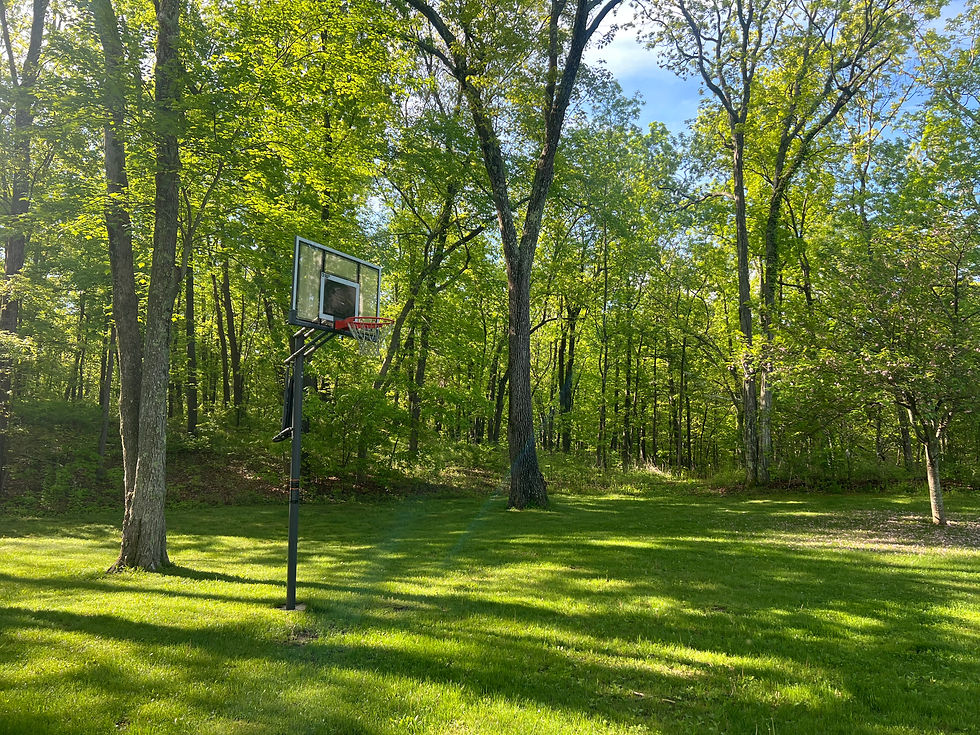
It’s interesting to look at Millbrook, New York now and see how much this town has evolved. It was home to affluent people in the Gilded ages such as “Charles Dieterich, a founder of Union Carbide, Harry Flagler, the son of a founder of Standard Oil, and Margaret Carnegie Roswell, the daughter of Andrew Carnegie” (Millbrook Historical Society, 2025). Moving on throughout the years, the Dieterich Estate, more commonly known as the Hitchcock estate, was once occupied by the now Ex-Harvard Professor Timothy Leary, turning this mansion into an LSD study den in the 1960’s (Millbrook Historical Society, 2025). Despite all of the evolution that has taken place in the Hudson Valley, specifically Millbrook, New York, it’s important to think of the foundation in which we all inhabit. When I drive through Millbrook there are vast farmlands yet this is very different from the area of the Village that I live in. When looking at my property, the three soils that occupy my area are Fredon Silt Loam, Nassau-Cardigan complex, and Nassau-Rock outcrop complex. When digging into these three categories, the findings made a lot of sense due to the nature of my setup. The Fredon Salt Loam was in the area at the bottom of my driveway, which goes along the side of the mountain. The Fredon Silt Loam is described to be in depressions, along drainageways on valley floors, and outwash plains (Cary Institute, 1992). Being that when it rains and snows, the water moves down the hill, the soil in this area would be described as hydric, meaning, the soil is damp but not flooded (Merriam Webster, 2025). Although this land on my property is not tended to, research shows that this soil meets the criteria for “prime farmland” (Cary Institute, 1992). The soil was also described as moderately acid to neutral on the top with a slightly more acidic underlayer. While I probably would not start my garden in this area due to the distance from my house, blueberries and various types of flowers are good to grow in this semi-acidic, damp, loamy soil (Beaulieu, et.al, 2024). The Cary Institute suggested cover crops, conservation tillage, and crop rotations, to help maintain a balanced moisture content. The intention of these practices is to maintain soil productivity over an extended period of time. This type of soil was only 5.3% of the area suggested (USDA, 2019). Nassau-Cardigan complex, rolling, very rocky, occupied 52.1% of the soil while Nassau-Rock outcrop complex, steep, accounted for 42.6% (USDA, 2019). While these two soils have many things in common such as poor drainage properties and are unsuited for cultivated crops due to the underlying bedrock, the land in the Nassau-Cardigan complex, rolling, very rocky, region can be used for pastureland (Cary Institute, 1992). That being said, the study also mentions that overgrazing should be considered. Overgrazing causes a reduction in desirable pasture plants but can be improved through rotational grazing, restricted grazing during dry periods and maintenance of the crops (Cary Institute, 1992). Another difference between the two soils is that Nassau-Cardigan complex, rolling, very rocky can be used for residential whereas the Nassau-Cardigan complex, steep, is traditionally too steep for this type of operation (Cary Institute, 1992).
While my selected location doesn’t entirely match the way that the indigenous people utilized our land, by having this information and discovering what soils and the proper ways to maintain healthy soil can help me practice correct and useful methods while tending to the soil in my selected area. Additionally, paying attention to the same crops that these people grew can also help guide me into what grows well in my area. Farmland covers about one-third of New York, with cropland making up around three-fifths. Dairying is the state's top agricultural income source, accounting for more than half (Campbell, 2025). Other major farm products include poultry, livestock, fruits, vegetables, and field crops (Campbell, 2025). New York also grows horticultural specialties like nursery products, greenhouse crops, flower bulbs, and maple sugar, competing with Vermont. The state supplies the food-processing industry with fruits and vegetables such as apples, cherries, tomatoes, and peas (Campbell, 2025). New York has a long winemaking tradition, especially in the Hudson Valley and Finger Lakes, making it one of the country's largest wine producers (Campbell, 2025). This project helped me solidify if I was going to try and plant directly into the ground or utilize raised beds for better soil health. An interesting aspect is the idea that my location would be good for pasture. Jeff Walker, a geologist who teaches at Vassar College, explains that Valley lowlands that were created by glacial streams have sandy, silty and loamy (mixed clay, silt and sand) soils which are better for crops. Hills and slopes are covered by ablation till the larger pieces that were left as the glacier melted. These soils are better for grazing and pastures which proves true from my research (Doan, 2018). It is important to consider that one rainstorm can wash away 1 millimeter of dirt and for a 2.5-acre farm, it amounts to 13 tons of topsoil (Doan, 2018). I often think about the wooded areas in my yard and refer back to learning about agroforestry, specifically silvopasture. Silvopasture is integrating trees and grazing livestock which helps the soil maintain diversity but also allows shade for the grazing animals and minimizes the need to remove the already planted, carbon storing trees that currently live on my property (USDA, 2025). I live in an area where food is easily accessible but it is important to think about how people survived in history in the area one inhabits. Winter in the Hudson Valley is difficult for crop production, unless you have a greenhouse, so thinking about how indigenous people stored their food and maxed out their resources is inspiring to learn and consider when reflecting on the past of our land.
REFERENCES:
Mount Gulian Historic Site. (2025). The Wappinger People. https://mountgulian.org/history/the-wappinger-people/
Riverpool At Beacon. (2025). About The Hudson River. https://www.riverpool.org/the-hudson-river/#:~:text=Bountiful%20Estuary,a%20great%20diversity%20of%20life.
Blauweiss, S., Berelowitz, K. (2021, October 13). The Lenape, Mohicans and Iroquois were native to New York State. Hudson Valley One. https://hudsonvalleyone.com/2021/10/08/the-lenape-mohicans-and-iroquois-were-native-to-new-york-state/#:~:text=The%20clan%20occupying%20the%20Hudson,covered%20much%20of%20the%20Northeast
Campbell, A. K. and Scudiere, . Paul Joseph (2025, January 31). New York. Encyclopedia Britannica. https://www.britannica.com/place/New-York-state
Millbrook Historical Society. (2025). A Brief History of Millbrook. https://www.millbrookhistoricalsociety.org/history
Newton, D., Klare, E., Mara, J., Netter, H. Wapnick, D. (1996). Vol. 5: Out of the Wilderness
A History of the Hamlet of Bethel in the Town of Pine Plains, New York. The Little Nine Partners Historical Society. https://sites.rootsweb.com/~nylnphs/V5/3.htm
Huntting, Isaac (1897). History of Little Nine Partners: Of North East Precinct, and Pine Plains, New York, Dutchess County. Charles Walsh & Company, printers. Retrieved 29 October 2019. https://books.google.com/books?id=hJwvAAAAYAAJ&pg=PA33-IA2#v=onepage&q&f=false
Village of Millbrook. (2025). About. https://villageofmillbrookny.com/about/
Little Nine Partners Historical Society. (2025). The Railroads. https://lnphs.com/the-railroads#:~:text=The%20second%20line%20was%20the,to%20the%20Connecticut%20Western%20Railroad
Cary Institute. (1992). Soil Survey of Dutchess County, New York. https://www.caryinstitute.org/sites/default/files/public/downloads/lesson-plans/DutchessSoilSurvey.pdf
Merriam Webster. (2025). Hydric Definition. https://www.merriam-webster.com/dictionary/hydric
Beaulieu, D., Miller, K., (2024, August 01). 27 Acid-Loving Plants to Grow in Your Garden. The Spruce. https://www.thespruce.com/acid-loving-plants-2132427
United State Department of Agriculture. (2019, July 31). Web Soil Survey. https://websoilsurvey.sc.egov.usda.gov/App/WebSoilSurvey.aspx
United Stated Department of Agriculture. (2025). Silvopasture. Forest Service. https://www.fs.usda.gov/nac/practices/silvopasture.php#:~:text=Silvopasture%20is%20the%20deliberate%20integration,and%20long%2Dterm%20income%20sources.
Doan, P. (2018, November 16). The Dirt on Dirt. The Highlands Current. https://highlandscurrent.org/2018/11/16/the-dirt-on-dirt/?fbclid=IwAR0DVMTe6ELNkzdfbl6cAFn6gaRNSpwsNb4uHLu-s-l10wnt3LNfr1WO49s

Comments